Saturday, 3 November 2012

Saeed Anwar

Saeed Anwar Biography
Full name Saeed Anwar
Born September 6, 1968, Karachi, Sind
Major teams Pakistan, Agriculture Development Bank of Pakistan, Karachi, Lahore, United Bank Limited
Batting style Left-hand bat
Bowling style Slow left-arm orthodox


born in Karachi on September 6th 1968, the Pakistan Captain Saeed Anwar has become one of the best batsmen in the world through hard work, dedication combined with his exceptional talent. He has a tremendous eye, excellent timing, and makes use of his wrists better that any other batsmen in the game. He can find the gaps at will, and more often that not, a little push from Saeed simply races away to the boundry. Strong on all sides of the wicket, Saeed’s favorite shot is the cut shot, which he plays better than any other Pakistani batsmen.

Very strong on the off side, Saeed has the ability to play some glorious cover drives that are an absolute delight to watch. His off side shots are so good, that he is considered to be the best off side player, among left handed batsmen in the world. The reason for his immaculate off side play is because of his sound technique. He is solid in defence, yet can destroy any bowling attack in the world in a matter of minutes. His strength in timing and the ability to play on the rise, combined with excellent execution, makes him the best opener to ever come from Pakistan…far ahead of the likes of Soahil,Raja,and the Mohammad brothers.
As a first class cricketer, Saeed used to bat in the middle order however once he made his ODI debut in Australia, he was thrust into the opener’s role. He began opening the innings in domestic cricket, and made his way back into the ODI side as a specialist opener. Despite, having lost out on precious years due to politics in the PCB, Saeed never lost hope. He made most of the limited opportunity’s that Imran Khan gave him, yet he was over looked for the likes of Shoaib Mohammad and Ramiz Raja…players who never performed outside of Pakistan.

In 1993, Saeed created a new world record..he hit three back to back ODI hundreds in Sharjah, a feat never before achieved by any Pakistani player. He was now finally a permanant member of the ODI side, under Wasim Akram. However, he was still not considered for a test spot..once again a huge error by the selectors.

In 1994 however, Saeed finally got a chance to show his worth as a test match plater. He hit a mammoth 169 in New Zealand and combined it with some important half centuries in the rest of the series. He had now proven his credentials as a solid test match player with the temperment and ability to succeed at the level.
Since 1994, Saeed has played another 40 odd test matches, scored over 3500 runs and averages 47.20. He is simply a brilliant player. He is also the Captain of the Pakistan team. He has the ability to lead from the front and become an excellent Captain, as time will tell. Saeed is an excellent team man and gets along extremely well with his team mates, who have nothing but praise for him..as well as fans and press alike. Saeed is also a Computer Engineer, and his wife Lubna, is a doctor who takes care of him when he gets his regular dose of flu:)

Pakistan’s best batsman..is a great asset to the game of cricket.
Saeed Anwar
Saeed Anwar
Saeed Anwar
Saeed Anwar
Saeed Anwar
Saeed Anwar
Saeed Anwar
Saeed Anwar
Saeed Anwar
Saeed Anwar
Saeed Anwar
Saeed Anwar

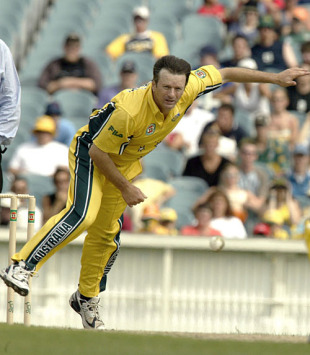
Steve Waugh

Steve Waugh Biography


Full name Stephen Rodger Waugh
Born June 2, 1965, Canterbury, Sydney, New South Wales
Major teams Australia, Ireland, Kent, New South Wales, Somerset
Playing role Middle-order batsman
Batting style Right-hand bat
Bowling style Right-arm medium

Stephen Rodger Waugh (born June 2, 1965) was the captain of the Australian Test cricket team from 1997-Jan 2004.

Making his debut as an all-rounder complementing his batting with handy medium pace, Steve came into the Australian ODI and test teams in the summer of 1985-86 (against New Zealand and India respectively), at one of the lowest ebbs the Australian team had reached with a succession of series losses. He proved crucial in both fields in Australia's surprise win in the 1987 World Cup.

His batting began to deliver on its promise when Australia regained the Ashes in 1989, with his first test century finally arriving after a succession of scores in the nineties. However, a run of poor form led to his being dropped from the Australian side in 1992, ironically to be replaced by his twin brother Mark Waugh.

Returning to the team against the West Indies in 1992-93, Steve built a reputation throughout the 1990s as perhaps the most solid batsman in world cricket. Lacking the attacking flair of Sachin Tendulkar and Brian Lara, his reputation for strength of will saw him make many centuries for his team, often under pressure and batting with the tailenders. Like most Australian players, he has an array of strong off-side shots. His trademark shot against spin bowling is the "slog sweep" which he gradually developed later in his career—theoretically technically unsound, it has proven highly effective against the spinners and even against faster bowlers at times. Waugh does not play the "hook shot" and is regarded as vulnerable to short-pitched bowling, a theory that has been widely tested by his opponents. Despite looking ungainly when facing it, he is rarely dismissed through it.

Waugh's ability to continue to play despite a back injury that largely prevented him bowling further enhanced his reputation. Waugh, along with the bowling of Shane Warne and Glenn McGrath, provided perhaps the major foundation upon which the Australian team rose to become what was widely regarded as the best team in the world by the mid-1990s.

Waugh took over the captaincy of the one-day side in 1997-98, as planning began for the 1999 World Cup. Producing several reasonable scores in a side struggling early, Waugh saved his best for two crucial games against South Africa, scoring 120 against South Africa in the last game of the "Super Six" to ensure Australia's progression to the semi-final, and then 56 in the semi, which was tied.

Upon the retirement of Mark Taylor in 1999, Waugh assumed the test captaincy, and turned an already successful side into a dominant one that in many cricket watchers' views ranks with Sir Donald Bradman's 1948 Invincibles and the West Indian teams of the 1980s as one of the best cricket teams of all time. Steve Waugh's ruthless approach has led to a succession of drubbings of hapless, outclassed opposition and a record run of 16 consecutive Test match wins, easily eclipsing the previous record of 10 by the West Indies.

Waugh lost the one-day captaincy, and indeed a spot in the one-day side, in 2001-02, but in typical style, declared that he wished to regain a place in the team. A wish he never achieved.

Waugh departs from the distinctly Anglocentric, ockerish, and politically conservative traditions of Australian cricket in his interest in India. Waugh helps to raise funds for a leper children's colony, "Udayan", in Calcutta Whilst hardly a novel thing for a celebrity to do, it is highly novel for an Australian cricketer. He reportedly also encourages his players to learn about and enjoy the countries they visit and play in—presumably partly to reduce the siege mentality of some previous Australian teams playing in south Asia, but also seemingly for a genuine desire to use cricket to build bridges.

Waugh is a keen photographer and has produced several "tour diaries" which feature his images. In his latter years as a cricketer, he has written for a number of newspapers. He insists on writing them himself rather than with the assistance of professional journalists.

Waugh is married to Lynette and has three children.

Steve Waugh retired from international cricket, after the fourth test against India on January 6, 2004. Steve saved the Australian team from defeat in his final test by an innings in which he scored 80. A record number of fans and spectators bid farewell to Waugh at the Sydney Cricket Ground (SCG)
 
Steve Waugh
 Steve Waugh
Steve Waugh
Steve Waugh
Steve Waugh
Steve Waugh
Steve Waugh
Steve Waugh
Steve Waugh
Steve Waugh
Steve Waugh
Steve Waugh


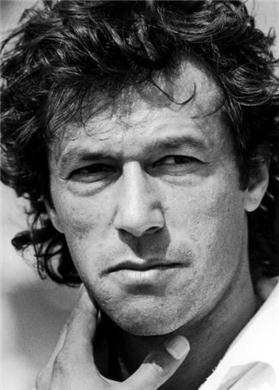
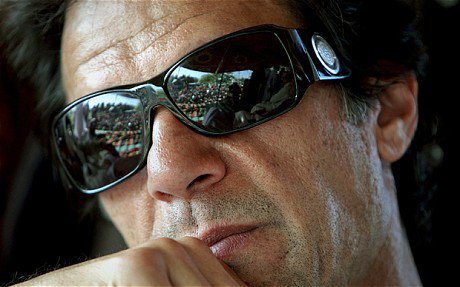
IMRAN KHAN

Biography of IMRAN KHAN

Full name Imran Khan Niazi
Born November 25, 1952, Lahore, Punjab
Current age 59 years 345 days
Major teams Pakistan, Dawood Club, Lahore, New South Wales, Oxford University, Pakistan International Airlines, Sussex, Worcestershire
Batting style Right-hand bat
Bowling style Right-arm fast


He is from the Niazi Pashtun Shermankhel tribe of Mianwali. His family is settled in Lahore, however, he still considers his background Pathan as per his autobiography (Warrior Race: A Journey through the Land of the Tribal Pathans).

Imran attended Aitcheson College and the Cathedral School in Lahore until he finished middle school, then entered the Royal Grammar School, Worcester, before completing his formal schooling with an undergraduate degree in Economics from Keble College, Oxford.

While at University, Imran Khan was also the captain of the Oxford University cricket team in 1974. He and his mother, Shaukat Khanum, come from a cricketing family – the Burkis, with two of his cousins, Javed Burki and Majid Khan, also having played Test cricket for Pakistan.

He is the finest cricketer Pakistan has ever produced, who is among the finest all-rounders and greatest fast bowlers the game has ever seen. He played Test cricket for Pakistan between 1971 and 1992, and was captain of the national team when they won their maiden World Cup in 1992.

After retiring from cricket, Imran Khan founded the Shaukat Khanum Memorial Cancer Hospital & Research Centre in Lahore.

In 1997, he started a socio-political movement known as the Pakistan Tehrik-e-Insaf (Movement for Justice). The main focus of his party is to bring justice to the people of Pakistan, largely via an independent judiciary. The party has Islamic overtones and is inspired partly by Imran Khan’s renewed commitment to Islam.

As a politician, his vision is to turn Pakistan into a just society, based on humane values, by creating an independent and honest judiciary that will uphold democracy, protect human rights and ensure the rule of law and, by promoting a merit based system that provides equal opportunity for upward social mobility to the working classes. His political ideal is the famous poet-philosopher, Allama Dr Muhammad Iqbal.

Talking to Daily Telegraph of England about his political goal, Imran Khan said: “I want Pakistan to be a welfare state and a genuine democracy with a rule of law and an independent judiciary. We need decentralisation, empowering people at the grassroots.”

He became a Member of Parliament for Mianwali in the October 2002 elections. He is very critical of the judicial system in Pakistan, which he says prevents accountability for the elite class. Initially he supported 1999 military coup of General Pervez Musharraf but late came in to the forefront against General Musharraf.

In 2005, as leader of his party Imran led a protest rally against the US-led coalition for allegedly desecrating the Holy Quran and made statements denouncing the Musharraf-Bush coalition. During the visit of US President George W Bush to Pakistan in 2006, he was the only politician to attempt to hold a rally against Bush. The rally was stopped and Imran Khan was detained by the police.

Imran Khan is also a special representative of UNICEF and Chancellor of Bradford University. His honours include Hilal-i-Imtiaz (Crescent of Excellence) in 1993 by the Pakistani government; Honorary Fellow of Keble College, Oxford and Wisden Cricketer of the Year 1983.

In 1995 he married Jemima Khan, the daughter of the late British billionaire Sir James Goldsmith. Jemima Khan embraced Islam before she married Khan. They announced their divorce on June 22, 2004. They have two sons named Suleman Khan (born on November 10, 1999) and Qasim Khan. He is alleged to have a daughter out of wedlock with Sita White, daughter of Lord Gordy White, a few years before he married Jemima Goldsmith. A US judge ruled him to be the father of Tyrian White after he failed to appear for a DNA test.

Although there are little achievements to credit of Imran Khan in the political arena, there is a long list of his achievements in the sport of cricket. He has the third highest best-ever bowling rating of 922 (1983) in Test cricket history behind S F Barnes’s 932 (1914) and G A Lohmann’s 931 (1896).

Imran Khan is pioneer of the art of reverse swing. He was one of the fastest bowlers ever to grace the game. Michael Holding, the great West Indian fast bowler and commentator, when asked in an interview with Cricinfo who the best bowlers he came up against were, said: “In my time, it was Dennis Lillee and Imran Khan. They had pace and they could do things with the ball. You had others who got a lot of wickets, but you wouldn’t say that they were fast. Imran … could intimidate people out with his pace and also get them with movement, especially into the right-hander.”

In the cricket world, Imran Khan is renowned for his leadership skills as a captain. Under his captaincy, Pakistan won the 1992 Cricket World Cup. Under his captaincy Pakistan drew three series with West Indies at a time when everybody else was being whitewashed by West Indies. He always led from the front and five of six Test hundreds and 14 of his 18 fifties came in 48 Tests as captain. His average during that time was 52.34, higher than the averages of Ian Chappell, Clive Lloyd, Steve Waugh, Gavaskar and Javed Miandad. Imran averaged 20.26 with the ball and four of his six 10-wicket hauls came as captain.

As a captain, he transformed the Pakistan team, previously known for its exceptional talent but lack of coherence into a well-moulded unit. He played his last Test match for Pakistan in January 1992 against Sri Lanka at Faisalabad and last ODI being the World Cup final against England at Melbourne in March 1992 resulting in the World Cup glory and triumph for Pakistan.

In 2000, Wisden organised a panel to vote for Wisden Cricketers of the Century who were judged to be the most prominent players of the 20th century, as selected by a 100-member panel of cricket experts appointed by Wisden Cricketers’ Almanac in 2000. In order of votes, the Wisden Cricketers of the Century, Imran Khan was number 10 on the list.

Along with Garfield Sobers, Ian Botham, Kapil Dev and Richard Hadlee, he achieved the ‘All-rounder’s triple’ (3000 runs and 300 wickets) in 75 Tests, the second fewest behind Botham’s 72, though statistically and qualitatively Imran Khan is superior to Botham in every aspect of the game except perhaps slip catching. He was one of the fastest bowlers of the world during the late 1970s and early 1980s, and in the later half of his career, one of the best batsmen in the Pakistan cricket team. He has the second highest average of all time for a Test batsman batting at number 6.

In April 2007, Imran Khan was voted as the greatest all-rounder in a readers’ poll by Cricinfo. He received 37 per cent of the votes, beating Sir Garfield Sobers who was second with 14 per cent out of the 20 all-rounders Cricinfo had selected. Incidentally Cricinfo panel chose Sobers as the greatest all-rounder independent of the poll. According to the panel, Imran Khan was Sobers’ closest rival amongst the quartet of great all-rounders (Imran, Botham, Hadlee, Kapil).

After retiring from cricket, Imran Khan founded the state-of-the-art Shaukat Khanum Memorial Cancer Hospital and Research Centre in Lahore on December 29, 1994. One of the leading institutions for free cancer treatment in the world, it is an international standard institution and is free for poor people. The World Health Organisation awarded the United Arab Emirates Foundation Prize for 2004 to Shaukat Khanum Memorial Cancer Hospital. He is building another cancer hospital in Karachi.

Imran Khan is also the Chairman of the Mianwali Development Trust, which is building the Namal College in Mianwali as an associate college of Bradford University. The first phase of the college buildings has been completed.

Imran Khan, perhaps first Pakistani, is the Chancellor of the University of Bradford since December 7, 2005. He said the fifth Chancellor of the university and is also a patron of the Born in Bradford research project.

After imposition of the state of emergency by General Musharraf on November 3, 2007, Imran Khan was put under house arrest but his succeeded in slipping away. However, he was arrested from the University of Punjab campus in Lahore a few days later with help of the Islami Jamiat-e-Talba, student wing of Jamaat-e-Islami. On November 19, 2007, he let out the word through his party members and family that he had begun a hunger strike. He was one of the 3,000 political prisoners released from imprisonment on November 21, 2007.

In 1976 and 1980, Imran Khan was awarded the Cricket Society Wetherall Award. He was awarded the Lifetime Achievement Award at the 2004 Asian Jewel Awards in London, UK.
IMRAN KHAN
Imran Khan
 
Imran Khan
Imran Khan
Imran Khan
 
Imran Khan
Imran Khan
Imran Khan
Imran Khan
Imran Khan
Imran Khan
Imran Khan